Kilimanjaro Motorcycle Safari – The Complete Guide
What riding the foothills of Africa’s highest peak is actually like — routes, costs, bikes, best season, and the Chagga villages most travelers never find. Updated for 2026.
A Kilimanjaro motorcycle safari is a guided or self-guided motorcycle tour through the foothills, Chagga villages, coffee farms, and Maasai plains surrounding Mount Kilimanjaro in northern Tanzania. It is based out of Arusha or Moshi and takes 1 to 7 days. Unlike summit climbing, a motorcycle safari explores the cultural and agricultural landscape around the mountain’s base — terrain most visitors never access. Costs range from $350 to $850 USD per person per day with iRideArusha, depending on group size, duration, and accommodation. The best season is June–October and January–February. Standard bike is a Kibo 250; upgrades to VOGE 300 and CRF Rally are available.
The Kilimanjaro Most Travelers Never See
Every year, roughly 50,000 people attempt to climb Mount Kilimanjaro. They fly into Kilimanjaro International Airport (JRO), transfer to a lodge near one of the five summit gates, and spend six to eight days ascending and descending a single vertical route. It is a remarkable experience. It is also a narrow one.
The foothills below the summit — the slopes where 1.2 million Chagga people have lived and farmed for centuries — are largely invisible to the climbing industry. Most trekkers pass through them in a minivan with the curtains half-drawn. A Kilimanjaro motorcycle safari is built specifically to show you what that minivan misses.
Coffee farms that have been productive since the 1800s. Villages connected by dirt tracks that no 4×4 safari vehicle can navigate. Waterfalls in forest clearings with no signpost and no entrance fee. The mountain above you — not as a destination, but as a constant presence, changing light and character every hour. This is adventure travel in East Africa at its most unmediated.
5,895mKilimanjaro summit
900–2,400mSafari riding altitude
180–300kmFull circuit distance
1–7 daysTour duration range
$350–$850Per person per day
All yearOperable (dry season best)
What a Kilimanjaro Motorcycle Safari Actually Involves
The standard Kilimanjaro motorcycle safari departs from Arusha — 90km west of Moshi and 45 minutes from JRO — in the early morning. The first hour is highway riding east on the A23, with Kilimanjaro’s summit visible from around the Usa River flats on clear mornings. This stretch is busy: trucks, dala dalas, motorbikes, and the occasional herd of goats crossing without apparent awareness of traffic. It requires attention. It rewards it.
Once you leave the A23 south of Moshi and begin climbing into the foothills, the character of the ride changes entirely. Traffic drops to almost nothing. Roads narrow from two lanes to one, then from tarmac to packed red dirt. Banana groves form tunnels overhead. The smell of volcanic soil and eucalyptus replaces diesel fumes. You are now in the part of Tanzania that the guidebooks mention but rarely describe.
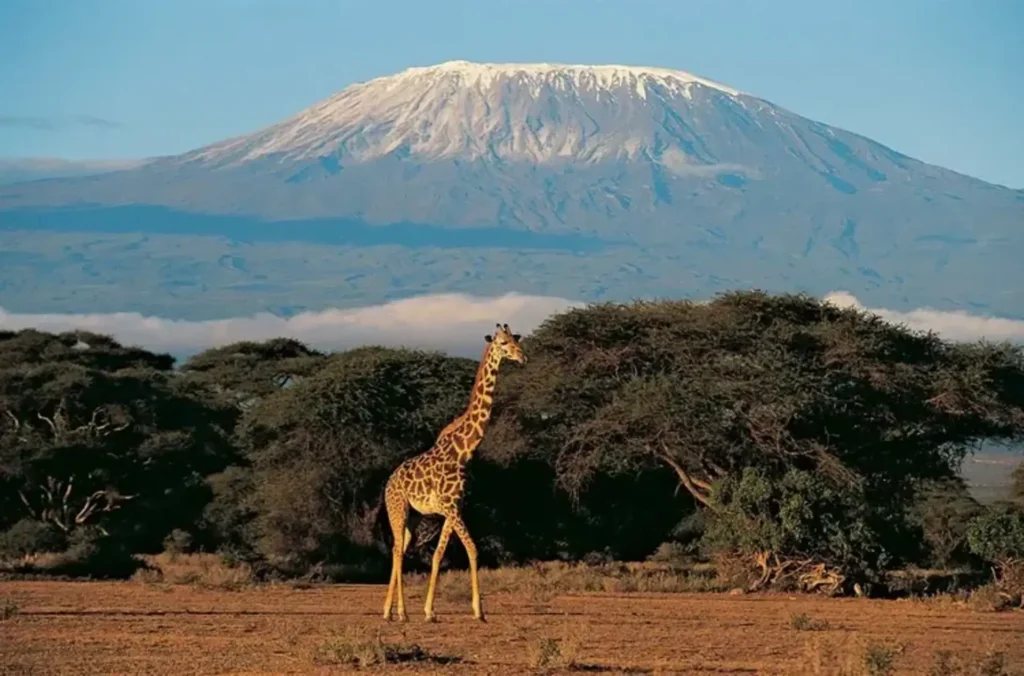
Depending on your route and guide, the day will include stops at working coffee farms (the Chagga have been cultivating arabica here since the 19th century), village markets where you are invariably the most interesting thing that has happened today, and viewpoints where Kilimanjaro fills the horizon from base to summit — an unobstructed view that most visitors to the region never find because it is only accessible on foot or on a motorcycle.
“The summit is an achievement. The foothills are an experience. They are not the same thing, and one does not require the other.”
Kilimanjaro Motorcycle Safari Routes
iRideArusha runs three core route configurations for the Kilimanjaro area. All depart from Arusha. All can be customised.
| Route | Duration | Distance | Terrain | Best for |
|---|---|---|---|---|
| Foothills Day Ride | 1 day | ~100km | 70% tarmac30% dirt | First-timers, limited time |
| Chagga Village Circuit | 2–3 days | ~200km | 50% tarmac50% dirt | Cultural riders, intermediate |
| Kilimanjaro Full Circuit | 4–5 days | ~320km | 40% tarmac60% dirt/track | Experienced riders, full immersion |
| Kilimanjaro + Ngorongoro | 6–7 days | ~480km | MixedIncludes crater rim | Riders wanting wildlife + mountain |
// Stage Breakdown — Kilimanjaro Full Circuit (4–5 days)
- Day 1: Arusha → Moshi via A23 highway (~80km). Evening briefing, gear check, route planning.
- Day 2: Moshi foothills coffee farm circuit — Chagga villages, Marangu gate road to forest edge (~90km, mixed surface).
- Day 3: Upper village track loop — altitude riding 1,500–2,000m, waterfall stops, remote homesteads (~60km, mostly dirt).
- Day 4: West Kilimanjaro plains — Maasai territory, open savanna, Amboseli border country (~100km, mixed).
- Day 5: Return to Arusha via Longido or direct A23 (~80–120km depending on route variant).
How Much Does a Kilimanjaro Motorcycle Safari Cost?
Pricing varies based on group size, duration, accommodation standard, and whether you choose a guided tour or self-guided rental. The table below reflects iRideArusha 2026 pricing as a reference point.
| Tour Type | Duration | Price (per person) | Includes |
|---|---|---|---|
| Guided Day Ride | 1 day | $350–$450 | Bike, guide, fuel, lunch |
| Chagga Village Circuit | 2–3 days | $650–$850 / day | Bike, guide, accommodation, meals, support vehicle |
| Full Circuit | 4–5 days | $600–$750 / day | Full package — better per-day value |
| Combined Kili + Ngorongoro | 6–7 days | $550–$700 / day | Motorcycle + wildlife safari combo |
| Self-guided Rental | 1–14 days | $65–$120 / day | Bike only — guide and support extra |
Prices are per person based on 2 riders. Solo riders pay a single supplement. Group discounts apply for 6+ riders. Contact iRideArusha for a custom quote.
Best Time of Year for a Kilimanjaro Motorcycle Safari
Tanzania has two dry seasons and two rainy seasons per year. For motorcycle riding, the dry seasons offer the best road conditions and visibility.
// Season Guide
Peak dry season: June–October. Best overall conditions. Roads firm, mountain frequently cloud-free in early morning, temperatures cool at altitude. July and August are the busiest months — book 6–8 weeks in advance.
Short dry season: January–February. Excellent conditions, fewer visitors than peak season, and the post-Christmas lull means better availability. Often the best value combination of conditions and price.
Long rains: March–May. Heavy rainfall makes many dirt tracks impassable or very challenging. Not recommended for most riders. Only suitable for experienced off-road riders specifically seeking the lush wet-season landscape.
Short rains: November–December. Variable conditions. Some years light and manageable, some years heavy. Check current conditions with iRideArusha before booking during this period.
The Chagga People and the Cultural Dimension
The Chagga are one of Tanzania’s most culturally distinct communities. Living on Kilimanjaro’s southern and eastern slopes between roughly 800m and 2,200m, they developed a highly sophisticated agricultural system — including gravity-fed irrigation channels from glacier meltwater — that made them one of the most prosperous communities in pre-colonial East Africa.
They were also among the first people in Tanzania to cultivate arabica coffee commercially, beginning in the early 20th century. Today, Kilimanjaro coffee is internationally recognised — and the farms you ride through on a motorcycle safari are working operations, not tourist reconstructions. Stopping at a Chagga coffee farm is one of the genuinely unmissable experiences of the ride. You can see the full processing chain — cherry picking, wet processing, drying — and taste coffee grown at altitude on the slopes of the mountain it’s named after.
Beyond coffee, a motorcycle gives you access to Chagga homesteads, village markets, and roadside encounters that are impossible in a safari Land Cruiser. Locals are consistently hospitable. Swahili is widely spoken. Children will chase your bike for longer than you’d expect, which is either charming or alarming depending on how fast you’re going.
Combining a Kilimanjaro Motorcycle Safari with East Africa Adventure Travel
Arusha is the hub of adventure travel in East Africa for good reason. Within a 3-hour radius of the city you have access to: Kilimanjaro and its foothills, Ngorongoro Crater (one of the world’s great wildlife destinations), Tarangire National Park (extraordinary elephant populations), Lake Manyara, and the gateway roads to the Serengeti. No other city in Africa concentrates this density of world-class adventure within motorcycle range.
Common multi-day itineraries that combine motorcycle touring with wildlife include riding the crater rim road at Ngorongoro (the caldera descent requires a 4×4, but the rim itself is extraordinary on a motorcycle), and the Tarangire circuit — riding the boundary roads of the park and entering via game drive vehicle for a full-day safari.
iRideArusha designs combined itineraries that integrate both elements seamlessly. Take the adventure quiz to find the combination that fits your available time and riding experience.
// Motorcycles Available — iRideArusha Fleet
Which Bike Will You Ride?
Most Popular
Kibo 250
250cc · Trail Bike · Standard Tour Bike
Lightweight, reliable, and proven on Tanzanian roads and tracks. The Kibo 250 is the right bike for the vast majority of riders on this route. Easy to pick up on dirt, forgiving on rough tarmac, and low enough maintenance to keep running all day.✓ All experience levels
VOGE 300 Rally
300cc · Adventure · Upgrade Option
More power and ground clearance than the Kibo. Good choice for riders with previous off-road experience who want a more capable machine for the upper altitude tracks. Comfortable over longer daily distances.✓ Intermediate to advanced
CRF 300 Rally
300cc · Honda · Upgrade Option
Honda’s benchmark rally-style bike. Excellent suspension, proven reliability, and capable on both tarmac and technical dirt. The best choice for riders who want genuine off-road performance on the upper foothill routes.✓ Intermediate to advanced
KTM 390 Adventure
390cc · KTM · Premium Upgrade
The premium choice for experienced adventure riders. Powerful, well-suspended, and capable across all terrain types. Best suited to riders who ride regularly and are comfortable on challenging off-road sections.✓ Experienced riders only